Donate

Search Website

Khums Calculation

Surplus

Amount you own, in British Pounds ?
Calculated on your khums due date.
Equivalent amount, in British Pounds, of foreign currency you own ?
Calculated on your khums due date.
Debts owed to you that you expect to be repaid ?
Do not include this if it was accounted for in previous financial years.
In-kind possessions not used for sustenance ?
This includes buildings, farms, factories, commodities, work tools, and any household items or possessions not used for sustenance. Calculate these at present value if they were acquired with surplus income on which a year has not elapsed, and at cost price if they were acquired with surplus income on which a year has elapsed. If acquired with a combination of income, then calculate these at present value in relation to what was acquired with surplus income on which a year has not elapsed, and at cost price in relation to what was acquired with surplus income on which a year has elapsed.
Financial dues ?
This includes the due of key premium (surqufliah), the due of utilizing agricultural lands owned by the state, and the due of revival of lands which are fenced and prepared for residency. Calculate these at present value if they were acquired with surplus income on which a year has not elapsed, and at cost price if they were acquired with surplus income on which a year has elapsed. If acquired with a combination of income, then calculate these at present value in relation to what was acquired with surplus income on which a year has not elapsed, and at cost price in relation to what was acquired with surplus income on which a year has elapsed.
Amount you utilized prior to your khums due date ?
This is cash which was subject to khums prior to your khums due date, and which you have already spent (e.g. If this is the first year you pay khums, despite having needed to pay khums in previous years)
Fungible items you utilized prior to your khums due date ?
These are fungible items which were subject to khums prior to your khums due date, and which you have already utilized. Calculate these according to present value. Fungible items are those which are freely exchangeable or replaceable, in whole or in part, for another item of a similar nature, such as machinery or factory-produced fabrics.
Non-fungible items you utilized prior to your khums due date ?
These are non-fungible items which were subject to khums prior to your khums due date, and which you have already utilized. Calculate these according to their value at point of utilization. Non–fungible items are unique items, such as unique paintings, monuments, and unique jewelry.
Amount you already paid with intention of Sahm Al-Imam ?
Amount you paid with the intention of Sahm Al-Imam before your khums due date.
Amount you already paid with intention of Sahm Al-Sada ?
Amount you paid with the intention of Sahm Al-Sada before your khums due date.

Deductions

Commercial debts ?
Include all commercial debts you still owe others.
Remaining sustenance debts taken in the financial year ?
Includes debts borrowed in the financial year for accommodation (mortgage), a car, etc. Please refer to more detailed rulings for accounting for mortgages.
Remaining sustenance debts taken in previous financial years ?
Includes debts borrowed in the previous financial year for accommodation (mortgage), a car, etc. The asset (house, car, etc.) must still be in your possession. Calculate only the amount that you have not deducted from your profits in previous financial years. Please refer to more detailed rulings for accounting for mortgages.
Amount you own which has already been subjected to khums ?
Calculated on your khums due date. Includes the remainder of funds that were subject to khums in previous years and on which you have already paid khums.
Notes
  1. 1) Your khums due date is the first day you started your job or business. If you are retired or not in employment, then you can agree a khums due date with a representative of the marja'a, or calculate separate khums years for each profit that you make, from the date you made that profit.
  2. 2) The khums of commercial commodities and real estate(s) which are intended for trading, should be paid in accordance with their current market value, even if they were bought with profits which a year has elapsed on, unless the price at which they were bought is higher than the current value.
  3. 3) If the calculations show that the amount of khums due is negative as a result of sustenance debts, then the amount of the sustenance debt equivalent to the amount of khums due for the rest of the item is calculated and excluded.
  4. 4) If sustenance debts are fully repaid in the financial year, this amount is excluded from the profits.
  5. 5) Possessions which are not subject to khums are:
    1. a. Possessions owned through inheritance:
    2. i. Cash
    3. ii. Real Estate
    4. iii. Objects that are transferrable and the like
    5. b. Possessions owned by the wife from the dowry (mahr):
    6. i. Cash
    7. ii. Gold Jewellery
    8. iii. Home furniture and the like
    9. c. Possessions used for personal or family provisions from the profits of that financial year:
    10. i. Home residence
    11. ii. Home furniture and other household items
    12. iii. Gardens used for leisure and to personally benefit from their fruit
    13. iv. Personal or family cars
    14. v. Animals that are benefited from by the household such as a cow for milk or a chicken for eggs
    15. d. Debts owed by others that you do not expect to be repaid.
    16. e. Items purchased through debt that has not yet been repaid.

Total amount subject to Khums £0

Khums Due £0

Sahm al Imam to be paid £0

Sahm al Sada to be paid £0

Email me Khums report

Winter Appeal 2026

17 November 2026

Winter is on its way to Afghanistan and Iraq, and for families already living with loss, it cannot be put off. The cold does not wait for a better moment, and neither can the care that keeps children and their families safe. That is the heart of this year’s Winter Appeal: Winter Won’t Wait, Neither Can We.

This winter, Al-Ayn is supporting more than 7,300 orphaned children in Afghanistan. Behind that number is a child, and behind each child is a family doing everything it can to keep going. Our work is about standing alongside them, with dignity at the centre of everything we do.

Why Winter Can’t Wait

For millions of families in Afghanistan, winter is not simply a colder season. It is the hardest stretch of the year. The UN projects that 21.9 million people, nearly half the population, will need humanitarian assistance in 2026, and in October it reported record-high levels of acute malnutrition and hunger as the cold months approached.

For children, the danger is physical and immediate. Malnutrition tends to peak in winter, when cold weather weakens immune systems and respiratory infections such as pneumonia rise. A child who has already lost a parent has fewer people to turn to when that happens, and the relatives caring for them are often stretched to their limit.

That is why timing matters. Winter arrives whether or not we are ready, and the weeks before the coldest days are the ones that count. Last winter, UNICEF warned that around 270,000 children in Afghanistan were at serious risk from the extreme cold. Every family reached in time is a family that faces those weeks better protected.
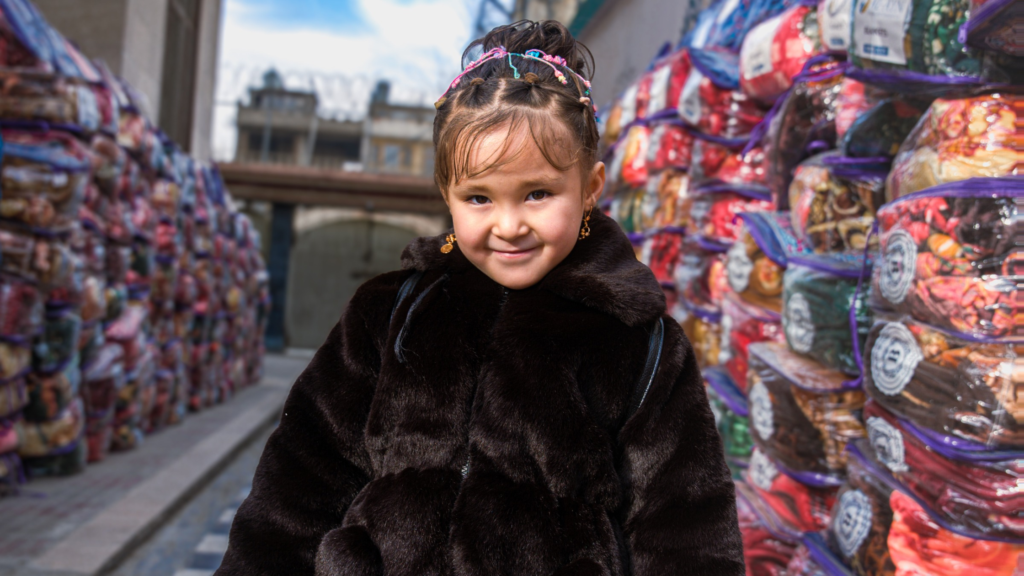
Afghanistan: vital aid for orphaned children and their families

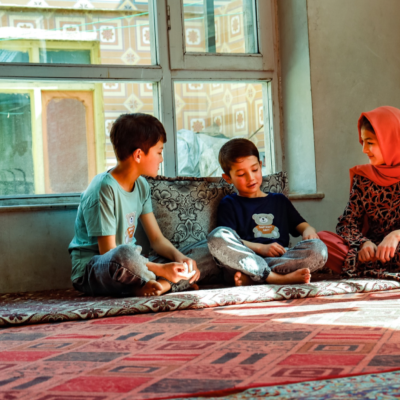
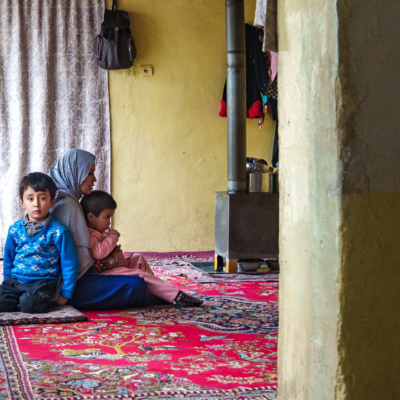
In Afghanistan, our winter work brings vital aid to orphaned children and the families who care for them. For a child who has lost a parent, the colder months can feel even heavier, and the relatives and carers around that child often carry more than anyone should have to.

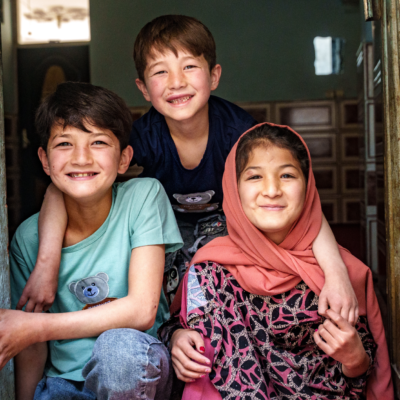
Our aim is simple: that no orphaned child faces winter alone, and that the families looking after them are not left to manage alone either. We have heard directly from families in Kabul and Mazar-i-Sharif, and their strength is what drives this appeal.

These families are holding things together with remarkable strength. What they need is for winter not to undo it.

This winter, our teams are delivering thick blankets and heating supplies to bring warmth and protection to families for the entire winter period.

Iraq: repairing homes

In Iraq, our focus is on home repairs. A home that keeps out the wind and the rain is far more than shelter. It is where a family feels safe, where children can sleep, study and simply be children.

By repairing the homes families already live in, we help them stay somewhere familiar and face the winter with dignity.

Winters in Iraq are colder and wetter than many people expect, and damaged housing is one of the obstacles facing families trying to rebuild their lives. A repair left undone means a roof that leaks through every rainstorm and a draught that never leaves the room, night after night, for children trying to sleep and study. Fixing a home before the worst of the weather arrives is one of the most direct ways to protect a family through the season.

Winter is already on its way, and for orphaned children and their families in Afghanistan and Iraq, the weeks ahead matter most. Winter won’t wait, and neither can we. Find out more about the Winter Appeal 2026 and how Al-Ayn is standing with orphaned children and their families in Afghanistan and Iraq.

Related